

Load capacity: 260KG+ wind resistance up to level 7! The fire-fighting drone track has achieved rapid speed.

By Xia Xianming
Photo provided by the interviewee
According to data from the China Academy of Information and Communications Technology, in 2023, the scale of China's low-altitude economy reached 505.95 billion yuan, with a growth rate as high as 33.8%. The market size is expected to reach 1.5 trillion yuan in 2025 and exceed 5.1 trillion yuan in 2035, making it another major sector that is likely to break through 6 trillion yuan after the automotive and real estate industries.
Behind this rapid growth curve, the sub-sectors of the low-altitude economy industry are constantly expanding their territory. When traditional firefighting is confronted with difficulties such as the difficulty in extinguishing fires in high-rise buildings and the obstruction of rescue operations in complex terrains, fire-fighting drones, with their flexible maneuverability in low-altitude areas, have become the key force to break through the deadlock.
Amid the wave of technological innovation in the emergency rescue field, Bosun Group, relying on the scientific research resources of Beihang University, has been deeply engaged in the entire industrial chain of low-altitude economy. With its forward-looking strategic layout and breakthrough technological innovation, it has become a brand in the domestic fire-fighting drone industry. Through the continuous iteration and upgrading of core products such as "Air 119" and "Air 120", Bosun Group has innovated the fire rescue model and constantly expanded the new boundaries of fire rescue.

Not only in flight, but also in building a full industrial chain of "vehicles + aircraft + systems + services"
Nowadays, the competition model among enterprises has evolved from individual competition to an all-round contest of the ecosystem. Therefore, building an ecosystem is particularly important for the development of enterprise groups.
Unlike other drone enterprises that only conduct single product research and development, Bosun Group has built a full industrial chain ecosystem model of "permanent magnet new materials + vehicles + drones + diversified services".
In terms of the front-end supply chain, the listed company Jinli Permanent Magnet (A+H listed, with a market value of nearly 30 billion yuan), in which Li Xinnong, the founder of the group, is the actual controller, mainly deals in high-performance neodymium iron boron permanent magnet new materials - a key material that helps upgrade the new energy vehicle and wind power industries. Now, it is being applied to the motor system of Bosun Fire drones. Provide stronger power and longer range for "Air 119".
It is reported that the "Air 119" has a maximum payload of 260 kilograms, a maximum takeoff weight of up to 800 kilograms, and a full-load flight duration of over 30 minutes. This not only sets a new performance record in the field of fire-fighting drones, but also means that a single flight can complete tasks such as high-altitude fire fighting, heavy material delivery, and casualty transfer that are difficult for traditional fire engines to reach, providing a brand-new tactical option for rescue operations in complex fire scenes.
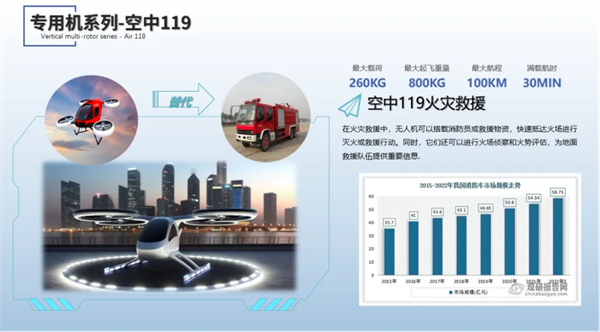
In the field of fire-fighting drones, Bosun has uniquely created an air-land coordinated system of "fire engines + drones". Its special fire engines are not only transportation tools but also truly "mobile fire-fighting aircraft carriers". This highly integrated system forms a command system and a fast charging/bomb replacement module, capable of achieving a minute-level response in the "reconnaissance - window breaking - fire extinguishing" chain.
This innovative design brings about three technical barriers -
In terms of tactical coordination, vehicle-mounted drones can take off near the fire scene, which is several times more efficient than deployment at fixed bases. As a mobile combat platform, fire engines can quickly establish take-off and landing bases and achieve rapid response.
In terms of data processing and command decision-making, the mobile command center can process the thermal imaging and gas detection data returned by the unmanned aerial vehicle in real time, and conduct real-time monitoring through multiple screens and multiple images to build a command center, achieve data closed-loop, and realize comprehensive control and efficient command and dispatch of the on-site situation.
In terms of working height, thanks to the convenience of the vehicle-mounted automatic take-off and landing function, once it arrives at the fire scene, it can quickly deploy and ascend to a height of 120 meters or even higher. This system can precisely break through Windows, directly target the core of the fire source, and continuously spray fire extinguishing agents to effectively suppress the fire.
For instance, the BX-2000 unmanned aerial vehicle is integrated with equipment fire engines, compressed air foam systems, and fire suppression mounts into a high-rise building fire suppression system. It achieves physical connection and fluid transmission through fire hoses, spraying compressed air foam towards higher fire points. The operation height exceeds 120 meters, making it particularly suitable for extinguishing high-rise building fires.
The practical results have confirmed the disruptive value of this system.
According to the China Emergency Management News, during a high-rise fire drill in Nanchang in 2023, the fire engine of Bosun completed the continuous takeoff and landing of three drones within five minutes, achieving actions such as breaking Windows, delivering fire extinguishing agents, and locating the injured.
In the practical test of unmanned aerial vehicle (UAV) fire fighting and rescue for super high-rise buildings organized by Longgang District, Shenzhen City, the Bosun UAV high-rise building fire fighting system performed outstandingly in the wooden stack fire task. The system preparation time is less than 2 minutes, and the transfer and deployment time is less than 3 minutes. It maintains precise positioning in strong wind conditions. The range of the compressed air foam is greater than 15 meters, reaching the core of the fire source directly to achieve continuous fire suppression.
With the continuous in-depth development of this tactical combination of "mobile fire-fighting aircraft carriers + unmanned aerial vehicles", the modern high-rise fire-fighting combat mode will be redefined. So, exactly how do they work?
Equipped with advanced devices such as thermal imagers and fire extinguishing bomb launchers, the "Air 119" immediately enters the dangerous fire scene to conduct fire reconnaissance. With its own water hoses, it quickly extinguishes fires on exterior walls and window sills. By building a covered bridge, it sends robots or robot dogs into the room to carry out fire reconnaissance and personnel rescue, while also achieving internal fire suppression.
The cabin of the drone is equipped with a robot dog with a wing design. When the aircraft flies to the windowsill and cannot enter the room due to the size limitation of the fuselage, the robot dog can be released. It carries fire extinguishing bombs or is connected to the water supply system through the tail water pipe. After entering the room, it sprays water through a pressurizing device to achieve precise secondary fire extinguishing operations and efficiently handle indoor fires.
At present, although most of the high-energy fire extinguishing systems for unmanned aerial vehicles (UAVs) on the market have broken through the combat height bottleneck of traditional fire fighting, there are still technical shortcomings in fire interior attack operations and emergency rescue of personnel. The "Air 119" fire extinguishing system and the "Air 120" rescue system developed by Bosun have precisely achieved key technological breakthroughs in addressing these two core pain points.
Based on its in-depth focus on the research and development of new materials at the front end and the manufacturing of vehicles and aircraft at the middle end, the company has further extended its industrial chain layout to the back end.
Relying on its subsidiary Hengjiu Shili, Bosun Group actively expands diversified service sectors: fire escape training hall + drone station. The fire escape training hall not only builds an immersive experience platform covering emergency safety science popularization and education, but also enhances the public's safety awareness and escape skills through fire scene simulation and practical escape drills. The drone station not only has established a professional drone training system, providing trainees with full-process guidance from theoretical teaching to practical operation, but also helps them obtain qualification certifications. In addition, the company is deeply involved in the government's drone purchase service project, providing customized solutions to meet the demands of government services.
Through the layout of the front-end, midstream and back-end industrial chains, Bosun has successfully created a complete closed-loop ecosystem of "whole machine manufacturing + technical services", achieving coordinated development from product production to service empowerment.

Revenue growth rate has continuously exceeded 30%! This model has been verified by the market
In the fierce business competition, even if one has technological achievements, it is difficult to achieve sustainable development if they fail to gain market recognition. From the perspective of key financial indicators, Bosun has achieved strong revenue growth by leveraging its precise market positioning and outstanding product services. It has maintained a growth rate of over 30% for several consecutive cycles. This remarkable performance is a powerful testament to the market's high recognition of it.
It is reported that Bosun achieved a revenue of over 150 million yuan in 2024, an increase of nearly 70% compared to 2023. In the first four months of 2025, the orders in hand increased by 30% compared with the same period last year, demonstrating strong development momentum and a promising market prospect.
Against the backdrop of significant overall downward pressure on the economy at present, how was this achieved?
First, strategically position in the trillion-yuan market.
In the "National Three-Dimensional Transportation Network Planning Outline" released by the central government during the 14th Five-Year Plan period, it is clearly stated that by 2035, the number of commercial and industrial-grade unmanned aerial vehicles (UAVs) supporting economic development in the country is expected to reach 26 million, and during the same period, the number of UAV pilots will also increase to 630,000. By 2035, the central government expects the industrial scale of the country's low-altitude economy to reach over 6 trillion yuan.
According to the prediction of the China Academy of Information and Communications Technology, the scale of China's low-altitude economy reached 505.95 billion yuan in 2023, with a growth rate as high as 33.8%. The market size is expected to reach 1.5 trillion yuan in 2025, 2 trillion yuan in 2030, and exceed 5.1 trillion yuan in 2035. It is another modern large industry that is expected to break through 6 trillion yuan after the automotive and real estate industries.
Forecast of the Low-altitude Economy Market Size from 2024 to 2035
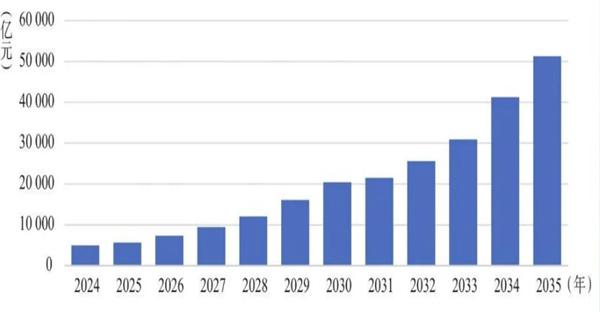
Source: China Academy of Information and Communications Technology
Second, a dual-wheel drive of product matrix and channel network.
Bosun Group implements a multi-product synergy strategy. In addition to the key products "Air 119" and "Air 120", drone products equipped with dry powder or fire hoses have also been launched to address the fire safety challenges in high-rise buildings and old residential areas, demonstrating acute market insight and rapid response capabilities.
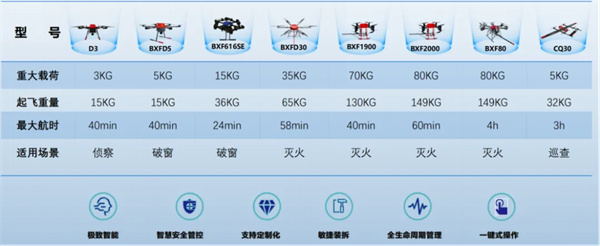
A comprehensive overview of multi-rotor series unmanned aerial vehicles
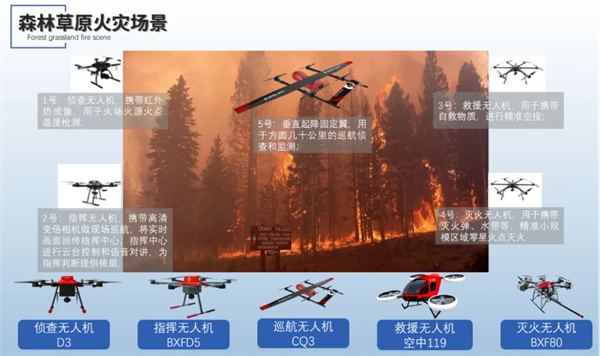
In terms of product innovationThe Bosun oil-powered unmanned aerial vehicle (UAV) forest fire extinguishing system adopts a collaborative design of large-load oil-powered UAVs and dedicated fire comprehensive support vehicles. Based on the high efficiency of on-board automatic takeoff and landing, it can achieve water pump relay water delivery at the scene of forest fires, and the UAV can quickly ascend to over 120 meters, effectively suppressing the fire with water. At the same time, it can also precisely deliver fire extinguishing bombs, fire hoses and other materials.
In terms of sales channel construction, Bosun Group has expanded its market through various means: directly participating in various bidding and tendering projects, and relying on its product and technological advantages, it has participated in over 70 tenders in total. Carry out channel cooperation, recruit city partners, and rapidly expand the sales network; The company's establishment of fire escape halls and low-altitude rest stations has not only been included in the scientific research projects of the Ministry of Emergency Management, but also serves as an important way to expand sales. In addition, the company has promoted its products to be included in the equipment procurement list by participating in the research of scientific research projects at the Ministry of Emergency Management, provincial and municipal levels.
At present, the company's products have not only been sold in southern provinces such as Jiangxi, Hunan, Fujian, Guangdong, Jiangsu and Anhui, but also established business ties with countries and regions like Singapore, the United Arab Emirates, Malaysia and the United States. The products have been exported to some overseas markets such as Singapore.
To optimize its unmanned aerial vehicle (UAV) products, Bosun Group has been conducting in-depth project cooperation and research and development with local fire departments around aspects such as demand research, feedback collection, product improvement, effect verification, and continuous iteration. In addition, the group has established a multi-dimensional cooperation model with emergency management departments and fire control institutions, covering joint drills, integration of industry and education, popular science education, and technical exchanges.
As a domestic fire rescue enterprise that not only has a factory but also possesses a test flight field and a drill field, Boxun Group has a strong hardware production capacity and can produce 1,000 various types of fire engines and hundreds of fire-fighting drones annually. Its unmanned aerial vehicle (UAV) products are being included in the government procurement list and put into use, demonstrating significant advantages in production scale and market coverage.

In terms of capital operation, Bosun Group has completed its angel round (raising 30 million yuan), Pre-A round (raising 70 million yuan), and is currently conducting its A round (raising 100 million yuan), attracting investment institutions including Xinyu High-Tech Investment, Xinke Fund, Gaoxin Zexin, Xuan Yi Investment, and Advantage Capital.
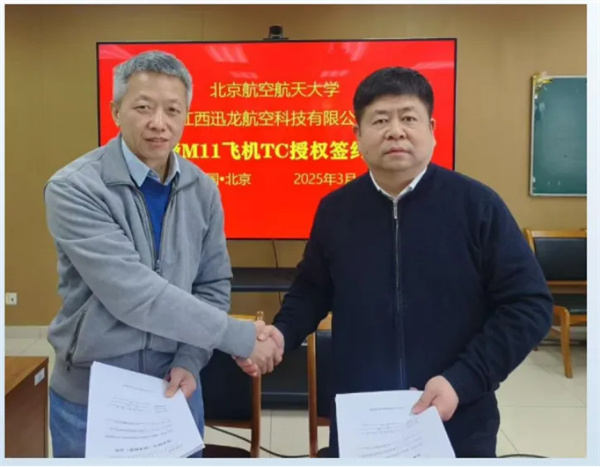
It is worth mentioning that Jiangxi Xunlong Aviation, a subsidiary of Beihang University, is cooperating with Beijing Changying Bee to introduce the TC authorization for the Bee M11 light aircraft developed by Beihang University. This model obtained the type certificate from the Civil Aviation Administration of China in 1996. It features an upper single-wing layout and thin-walled aluminum alloy wings, offering excellent handling and safety. It participated in the flag relay event of the four-aircraft formation air show from Beijing to Zhuhai in 1998. In the future, it can be widely applied in multiple fields such as forest patrol, aviation forest protection, emergency transfer, and general aviation training. Currently, it is actively promoting the application work for PC and AC certification. In addition, the unmanned and electric transformation of light aircraft based on bees is also being actively explored. After all, the market for transportation-type drones is even broader. In addition, the company is simultaneously developing regional logistics drones with excellent cost performance.
The business model and profitability of Boxun Group were also unanimously recognized by all the mentors at the recording site of the "Foresee Unicorn" program on Dragon TV, resulting in a rare "spotlight" scene.

Thirdly, the company promotes innovation through cooperation among industry, academia and research institutions.
Boxun Group is led by two scholard-type entrepreneurs: founder Li Xinnong (an outstanding alumnus of Beihang University, the actual controller and co-founder of Jinli Permanent Magnet, and vice chairman of the Jiangxi Provincial Overseas Chinese Association) and co-founder CAI Maolin (a doctor from Tokyo Institute of Technology, a professor at Beihang University, and an expert in the National "Thousand Talents Program").
The core team is composed of professional teams from Beihang University and industry experts. Relying on over 200 patented technologies, it has pioneered a vehicle-mounted unmanned aerial vehicle (UAV) high-rise fire extinguishing system in China, and was the first to achieve joint operation command of "reconnaissance - window breaking - fire extinguishing", establishing a digital product matrix of smart fire engines, UAV fire extinguishing, and fire Internet of Things.
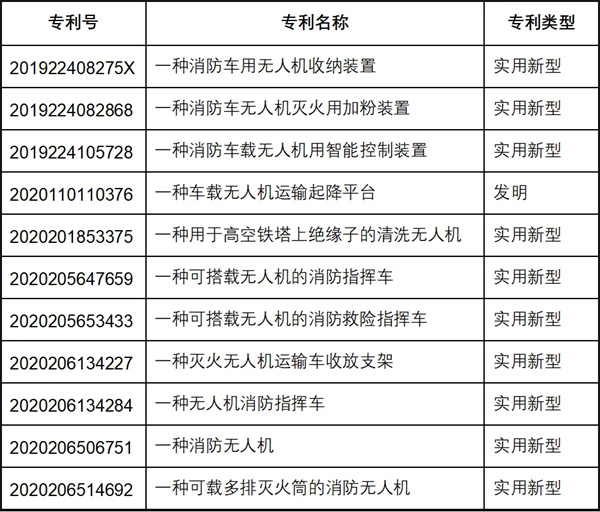
A list of some important patents
Through in-depth cooperation among industry, academia and research, Bosun has joined hands with institutions such as Beihang University, Jiangxi University of Science and Technology, and Ganxi Vocational College of Science and Technology to take the lead in establishing an industry-education integration community for the safety and emergency response industry, focusing on professional construction, talent cultivation and technological research and development. The Emergency Management College, jointly established by the school and the enterprise, cultivates practical talents in fields such as unmanned aerial vehicle application and Internet of Things through joint Party building and resource sharing, and has been selected as a "potential Unicorn Enterprise" in Jiangxi Province. The completion of the national-level emergency fire science popularization and education base has further strengthened its full-chain innovation capacity of "technology research and development - technology transfer - social services".

In conclusion: We look forward to the fire-fighting drones taking flight in the resonance of systems and technologies
The model of combining fire engines with drones launched by Boxun, although it reflects the company's distinctive features, also has a somewhat helpless move. At present, at the policy level, low-altitude airspace has not been liberalized, and drones can only operate in some specific fields and scopes. There is still a long way to go before drones can truly transport people and goods.
This kind of control is like an "invisible ceiling" hanging high, making it difficult for fire-fighting drones to fully unleash their practical effectiveness in areas such as disaster reconnaissance, material delivery, and high-altitude fire fighting. However, difficulties can also be turning points. It is hoped that relevant departments can gradually optimize airspace management policies, and in light of the special needs of fire rescue, explore differentiated, time-segmented and regional airspace opening plans.
When institutional innovation and technological breakthroughs resonate in unison, fire-fighting drones will surely break free from constraints and transform into "aerial sharpswords", weaving a more efficient and safer intelligent protection net on the battlefield of disaster relief, and injecting powerful technological strength into safeguarding people's lives and property.

